
Introducing the Free Chicago Seminars Experiential Social Media Nonprofits
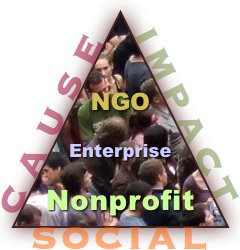 The Free Chicago Seminars of Experiential Social Media for Nonprofits and social impact firms aims to help nonprofits and social impact firms to unlock the power of experiential to transform their commitments from their donors, volunteers and other supporters. The series will be offered by CSRA in Chicago starting Summer 2018. Experiential is “the nonprofit way” to do social media because its main goal is serving people, not marketing to them. And it usually produces much better business outcomes than social media and marketing.
I designed this three-part public seminar series for nonprofits and social impact companies, and I’m making it available for free to qualified groups. I’ve pioneered the development of experiential social media since 2006, and I want to share a new way to build trust and commitment from donors, volunteers, partners, clients and other stakeholders to nonprofits and social impact firms.
[…]
 Facebook As Investment: How Trust Issues Block Its Best Path to Wealth describes why Facebook needs to change its orientation to users to unlock its full wealth potential. Over the past month, it has been de rigeur to comment on Facebook’s IPO and “quality” as an investment, but I decided to hold back until I could free a window to consider the matter in sufficient detail. The result is the “Facebook As Investment” trilogy, of which this is the first part. Part Two analyzes Facebook-the-platform’s investment prospects. Part Three advises executives on how to isolate their social business investments from Facebook business risks.
 The B2B Executive’s How-to Guide to Social Business is an executive primer on developing B2B relationships much faster and cheaper.
 As I read Jill Konrath’s excellent post on how to ask for “referrals” and mistakes that most salespeople make, it occurred to me that salespeople could do even better by breaking that model completely. Jill’s excellent point is that salespeople are uncomfortable with asking for referrals, so they cop out and do it badly by using a throwaway “Do you know anyone..” But I would tweak her suggested, “Whom should I meet” even further by focusing on client, not [salesperson’s] company.
 CSRA just completed a global study of social business in ten OECD language markets that may bode well for commercial and nonprofit organizations that are considering global audiences. We found that when you ground your social business strategy on rigorous research into the people you want to engage (stakeholders) and their specific online activities (workstreams), social business strategy can be applicable in several language markets simultaneously, leading to significant leverage and supporting global go-to-market initiatives. Having personally worked and lived in several language markets, I was surprised by the strong stakeholder/workstream patterns; I had assumed that the markets would differ from each other far more. Here I’ll offer my reflections on the research as well as recommendations for using social networks for global initiatives.