 Many a CMO, CTO and CIO is asking him/herself when, how and why they should introduce social networking to the enterprise and, unlike startups and consumers, they must contemplate how these emerging phenomena fit with the corporate universe of technology and business processes. Critical to the enterprise adoption calculus is guessing how prevalent new technologies, processes and habits will be, so here is a back-of-the-envelope look at how social networks might look three years in the future. Many a CMO, CTO and CIO is asking him/herself when, how and why they should introduce social networking to the enterprise and, unlike startups and consumers, they must contemplate how these emerging phenomena fit with the corporate universe of technology and business processes. Critical to the enterprise adoption calculus is guessing how prevalent new technologies, processes and habits will be, so here is a back-of-the-envelope look at how social networks might look three years in the future.
[…]
 This article will explain something that’s probably been nagging at you for some time: what in the world are all these little icons that seem to be popping up everywhere? This article will explain something that’s probably been nagging at you for some time: what in the world are all these little icons that seem to be popping up everywhere?

These little icons take you to various social tagging and bookmarking systems, which are an exceptionally powerful Web 2.0 phenomenon that is under the radar in 2008 but has immense potential for enterprises and individuals. Emerging social tagging solutions offer marketers an excellent means to enable customers to help each other and improve a wide range of Website metrics. The most well known tagging/bookmarking sites are B2C: Del.icio.us, Furl, Netvous, Bluedot and Ma.gnolia, but tagging has a solid B2B value proposition as well.
[…]
 LinkedIn and other social networks are often hard for executives to get their mental arms around—precisely because business and government have had linear structures, which function very differently than network structures. Reflect on many of the metaphors and concepts on which we depend: supply chains, production lines, value chains, hierarchies: even the notion of a process is usually linear. Our habit of thinking linearly makes networks difficult to deal with, conceptually and practically. LinkedIn and other social networks are often hard for executives to get their mental arms around—precisely because business and government have had linear structures, which function very differently than network structures. Reflect on many of the metaphors and concepts on which we depend: supply chains, production lines, value chains, hierarchies: even the notion of a process is usually linear. Our habit of thinking linearly makes networks difficult to deal with, conceptually and practically.
However, society is morphing from linear to networked patterns in almost all dimensions, and, although LinkedIn and other social networks reduce transaction costs, they don’t save us from having to deal with networks. It’s also interesting that the world, say, biological systems, exhibits networked patterns, and humans’ communication and business patterns are just starting to get in synch with that. If we want to be more effective and secure in this environment, the question of the moment is, “How do we make networks work for us?”
[…]
 Twitter is a relatively new Web 2.0 phenomenon that is blazing a new category, which some people term “microblogging,” because all Twitter posts are limited to 140 characters, and twittering is reporting. Twittering can be done via a plain old cell phone via text (SMS) messaging, via a web browser or via a smartphone, and it is chiefly a broadcast activity: twitterers push SMS messages out to their networks. Twitter is a relatively new Web 2.0 phenomenon that is blazing a new category, which some people term “microblogging,” because all Twitter posts are limited to 140 characters, and twittering is reporting. Twittering can be done via a plain old cell phone via text (SMS) messaging, via a web browser or via a smartphone, and it is chiefly a broadcast activity: twitterers push SMS messages out to their networks.
Like most things Web 2.0, Twitter began within the B2C, pop culture context, but I predict that it will become a staple for enterprises by 2010. Twitter is very transformational, and it holds significant disruptive potential for business processes. Here I will outline its use for forward-thinking CMOs, CEOs, CIOs and other executives.
[…]
 Wikis are one of Web 2.0’s most secret weapons as of this writing, and they will transform the metrics around administration and communication. They are “leicht,” as Germans say. Deceptively simple. Sublime. Wikis are one of Web 2.0’s most secret weapons as of this writing, and they will transform the metrics around administration and communication. They are “leicht,” as Germans say. Deceptively simple. Sublime.
Wikis are collective desktops that enable teams to collaborate much more efficiently than they do now. Gone are myriad versions of locally (on your computer) stored spreadsheets, presentations and documents that team members shuffle around via legacy email, fax, phone and sneakernet. Legacy project management is terrifically inefficient, and wikis enable their complete reengineering by maximizing the power of asynchronous communication (not concurrent, like a face to face conversation). Here’s how they work.
[…]
LinkedIn tries to curb the natural human competitive instinct by capping the number of contacts displayed at 500, so people who like to achieve high numbers had to create their own sites. Many people wonder how it’s possible to manage large networks, so here I will address that briefly.
The organizing principle that drives activity in LinkedIn or other networks is, “What’s the point, what am I trying to accomplish?” Without some kind of intention, large numbers of contacts are essentially data and nothing more. They could be evolved to higher value relationships, but that takes work, and no one has the kind of time to deal with such a huge network.
[…]
 Everything You Wanted to Know about Web 2.0: Blogs concisely explains blogs’ value proposition for businesses and executives. Everything You Wanted to Know about Web 2.0: Blogs concisely explains blogs’ value proposition for businesses and executives.
Probably the most pervasive Web 2.0 tool out there is the weblog or “blog.” Blogs have a personal element to them and reflect the personal element of Web 2.0, which is at root about P2P (person to person) communication and connections. Blogs are a powerful way to share what things are important to you.. and to your stakeholders, whether they are boards of directors, prospective employers, partners or prospective employees.
As you can see from the Google Trends profile below right, references to “blog” have steadily grown since 2004, but many executives are unfamiliar with what blogs are exactly, how they work and what they’re good for. The EGLI Guides Series will briefly define blogs from a business and marketing context, explain how you can use them and share a few enterprise blog vendors.
[…]
Bank Panic in Second Life Prompts Battlefield Promotion of Regulators reveals interesting parallels between physical and virtual worlds—it’s real money, after all.

“What? I can’t go to the grocery store! My bank’s automated teller machine refuses to dispense cash, and I’m planning a big cook-out tonight!” What’s an avatar to do?
It turns out that an inworld bank failure this summer cost residents about $750,000 USD and led to a run on Second Life banks, which eventually precipitated intervention by the highest authority available, the virtual world’s creator, Linden Labs. But the root cause may well have been LL’s earlier intervention in the economy by banning gambling on the site.
[…]
 I am pleased to announce that The Executive’s Guide to LinkedIn is going on the road! Our first public seminar will be held on 11 March 2008 at the University of Chicago’s Gleacher Center. The morning seminar’s focus will be helping executives with underutilized Linkedin accounts to take it to the next level by leveraging our planning methodology as well as LinkedIn’s advanced tools. I am pleased to announce that The Executive’s Guide to LinkedIn is going on the road! Our first public seminar will be held on 11 March 2008 at the University of Chicago’s Gleacher Center. The morning seminar’s focus will be helping executives with underutilized Linkedin accounts to take it to the next level by leveraging our planning methodology as well as LinkedIn’s advanced tools.
As you can imagine, I talk with many executives about LinkedIn, and most of them don’t see its real potential because LinkedIn’s tools are not fully explained, and the site doesn’t offer guidance for using it to get results. This seminar addresses the need. Here’s the agenda, and I’ve included some thoughts behind what we’ll do below.
[…]
Web 2.0 Impact on 2008 U.S. Presidential Election Declared Minimal at Executives’ Club, but cantankerous subtext hints at possible monkey wrench—democratic race in spotlight.
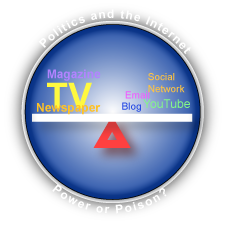 The Executives’ Club of Chicago fielded an expert panel to brief Midwest executives on Web 2.0’s current and likely impact on one of the most watched U.S. elections in recent history. Marie Cocco, a renowned political columnist, Peter Greenburger, Director of Google’s Elections & Issue Advocacy Team, and Alan Webber, Senior Analyst of Forrester Research brought to bear diverse perspectives on the question at the event, which took place at The University Club on January 31, 2008. The Executives’ Club of Chicago fielded an expert panel to brief Midwest executives on Web 2.0’s current and likely impact on one of the most watched U.S. elections in recent history. Marie Cocco, a renowned political columnist, Peter Greenburger, Director of Google’s Elections & Issue Advocacy Team, and Alan Webber, Senior Analyst of Forrester Research brought to bear diverse perspectives on the question at the event, which took place at The University Club on January 31, 2008.
They produced a logical conclusion, namely that Web 2.0 was a force in the making but that it would probably not be a decisive factor this year. The session was graciously co-hosted by Communications Committee Co-Chairs David Prosperi, Vice President Global Public Relations, AON and David Blake, Publisher of Crain’s Chicago Business.
As usual, I will share my notes of speakers’ remarks before adding my between the lines analysis and conclusions. […]
|
|
