 Learning how to leverage social networks for business will be one of the top five requirements to thriving in 2009, and LinkedIn is an ideal place to begin because it helps to find opportunity: new customers, partnerships or jobs. The Executive’s Guide to LinkedIn has scheduled three new Collaborative Seminars in Chicago and Cleveland. Here is how participants increase their results: Learning how to leverage social networks for business will be one of the top five requirements to thriving in 2009, and LinkedIn is an ideal place to begin because it helps to find opportunity: new customers, partnerships or jobs. The Executive’s Guide to LinkedIn has scheduled three new Collaborative Seminars in Chicago and Cleveland. Here is how participants increase their results:
EGLI participants create their individualized LinkedIn plans They learn how to build their networks and manage their time according to the plan They learn how to use LinkedIn’s advanced tools […]
Alumni 2.0 is a key component of transitioning to a new employment paradigm by using online social networks like LinkedIn; this post outlines some of its key concepts […]
Volatility, Uncertainly and Opportunity—Move Crisply while Competitors Are in Disarray
 Now that the Year in Review 2008 has summarized key trends, we are in excellent position for 2009 prognostications, so welcome to Part II. As all experienced executives know, risk and reward are inseparable twins, and periods of disruption elevate both, so you will have much more opportunity to produce uncommon value than normal. Now that the Year in Review 2008 has summarized key trends, we are in excellent position for 2009 prognostications, so welcome to Part II. As all experienced executives know, risk and reward are inseparable twins, and periods of disruption elevate both, so you will have much more opportunity to produce uncommon value than normal.
This is a high-stakes year in which we can expect surprises. Web 2.0 and social networks can help because they increase flexibility and adaptiveness. Alas, those who succeed will have to challenge conventional thinking considerably, which is not a trivial exercise in normal times. The volatility that many businesses face will make it more difficult because many of their clients and/or employees will be distracted. It will also make it easier because some of them will perceive that extensive change is afoot, and Web 2.0 will blend in with the cacaphony. Disruption produces unusual changes in markets, and the people that perceive the new patterns and react appropriately emerge as new leaders.
[…]
Editor’s Choice of the Global Human Capital Journal—Accelerating Disruption and Opportunity
 What a year! When I wrote in the 2007 Year in Review that 2008 “would produce an unimaginable degree of change,” I had no idea how right that would prove to be. We saw major disruption in the global economy, and the U.S. presidential campaign closed the year with a major political upset, largely at the hand of social media. That said, I still believe that 2008 will prove to be a transitional year and that more profound change is on the way. What a year! When I wrote in the 2007 Year in Review that 2008 “would produce an unimaginable degree of change,” I had no idea how right that would prove to be. We saw major disruption in the global economy, and the U.S. presidential campaign closed the year with a major political upset, largely at the hand of social media. That said, I still believe that 2008 will prove to be a transitional year and that more profound change is on the way.
Look in any direction. From a macroeconomic perspective, the global economy is showing itself to be pervasively interdependent. The U.S. successfully exported its real estate finance crisis without even working up a sweat. I don’t believe that anyone really knows where all the bodies are buried yet, and central bank chairmen, national presidents and global organization leaders are still holding their breaths, even though they smile bravely on television. Barack Obama’s successful U.S. presidential campaign showed that a new era of politics is upon us; as we’ll […]
Conventional Wisdom Scuttled—Disruption Preview—Business in the Batter’s Box
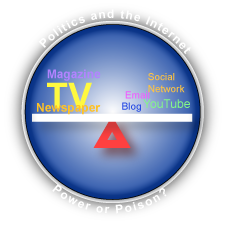 Barack Obama’s presidential campaign was more than a major social media milestone because it ushered in a new relationship model among leaders and their supporters. Due to social media, an unprecedented number of individuals had a new kind of active, direct role in Obama’s campaign; moreover, I predict that the Obama campaign and imminent administration will change citizens’ and consumers’ expectations of “leader” and “follower” roles in government and business. Amazon.com changed consumers’ expectations about retail in general—information on demand, reviews, unbelievable variety at low prices—and a significant portion of Obama supporters will want to continue their support to “make the change happen.” These supporters will bring their changed expectations of action and collaboration to their vendors. That means your company. Barack Obama’s presidential campaign was more than a major social media milestone because it ushered in a new relationship model among leaders and their supporters. Due to social media, an unprecedented number of individuals had a new kind of active, direct role in Obama’s campaign; moreover, I predict that the Obama campaign and imminent administration will change citizens’ and consumers’ expectations of “leader” and “follower” roles in government and business. Amazon.com changed consumers’ expectations about retail in general—information on demand, reviews, unbelievable variety at low prices—and a significant portion of Obama supporters will want to continue their support to “make the change happen.” These supporters will bring their changed expectations of action and collaboration to their vendors. That means your company.
The Obama campaign is very instructive to business leaders because business customers are changing expectations of their leaders, as we’ll discuss in more detail below. As the Global Human Capital Journal is not primarily focused on politics, I am less interested in the fact that Obama was elected than how he was […]
Sneak preview: Christopher S. Rollyson to present eight social networking healthcare case studies at the Social Networking Conference in Miami, January 23, 2009 […]
LinkedIn versus Facebook versus Twitter: a thumbnail guide on selecting which Web 2.0 sites your company should be on […]
2009 Poised as Inflection Point in Enterprise Usage—LinkedIn Increases Relevance to B2B Executives
 During the 1990s, I was intimately involved with helping global organizations to decentralize their information technology—as a management consultant and marketing executive. However, a far more disruptive force is imminent today: communications and marketing are rapidly evolving into a networked, distributed pattern, following IT’s lead. Individuals that congregate online will have an increasing role in affecting how other people make decisions, significantly weakening the influence of the mass media on which many marketing strategies depend. Organizations that depend on centralized, controlled communications will be astonished at how fast they become irrelevant over the next five years. Although the case studies are still being written, I’ll go on record as saying that the 2008 U.S. presidential election will prove to be an inflection point of digital social networks’ disruptive potential. During the 1990s, I was intimately involved with helping global organizations to decentralize their information technology—as a management consultant and marketing executive. However, a far more disruptive force is imminent today: communications and marketing are rapidly evolving into a networked, distributed pattern, following IT’s lead. Individuals that congregate online will have an increasing role in affecting how other people make decisions, significantly weakening the influence of the mass media on which many marketing strategies depend. Organizations that depend on centralized, controlled communications will be astonished at how fast they become irrelevant over the next five years. Although the case studies are still being written, I’ll go on record as saying that the 2008 U.S. presidential election will prove to be an inflection point of digital social networks’ disruptive potential.
LinkedIn is a leading venue for B2B and B2C executives, so it merits significant attention. The inputs for this Executive Adoption Snapshot are varied: I have had the opportunity to work with hundreds of executives to apply LinkedIn to their business processes in 2008. I met two LinkedIn […]
Between-the-lines analysis of LinkedIn CEO Dan Nye’s interview for the San Francisco Chronicle: LinkedIn’s biggest challenge is encouraging executive adoption, promoting understanding of LinkedIn’s business value.. nice LinkedIn statistics […]
Executive’s Guide to LinkedIn quarterly report reveals new executive education formats and innovations: social networking registration, boardroom seminars, twitter feed, Facebook Page and the power of alumni […]
|
|
